loading
Product Overview
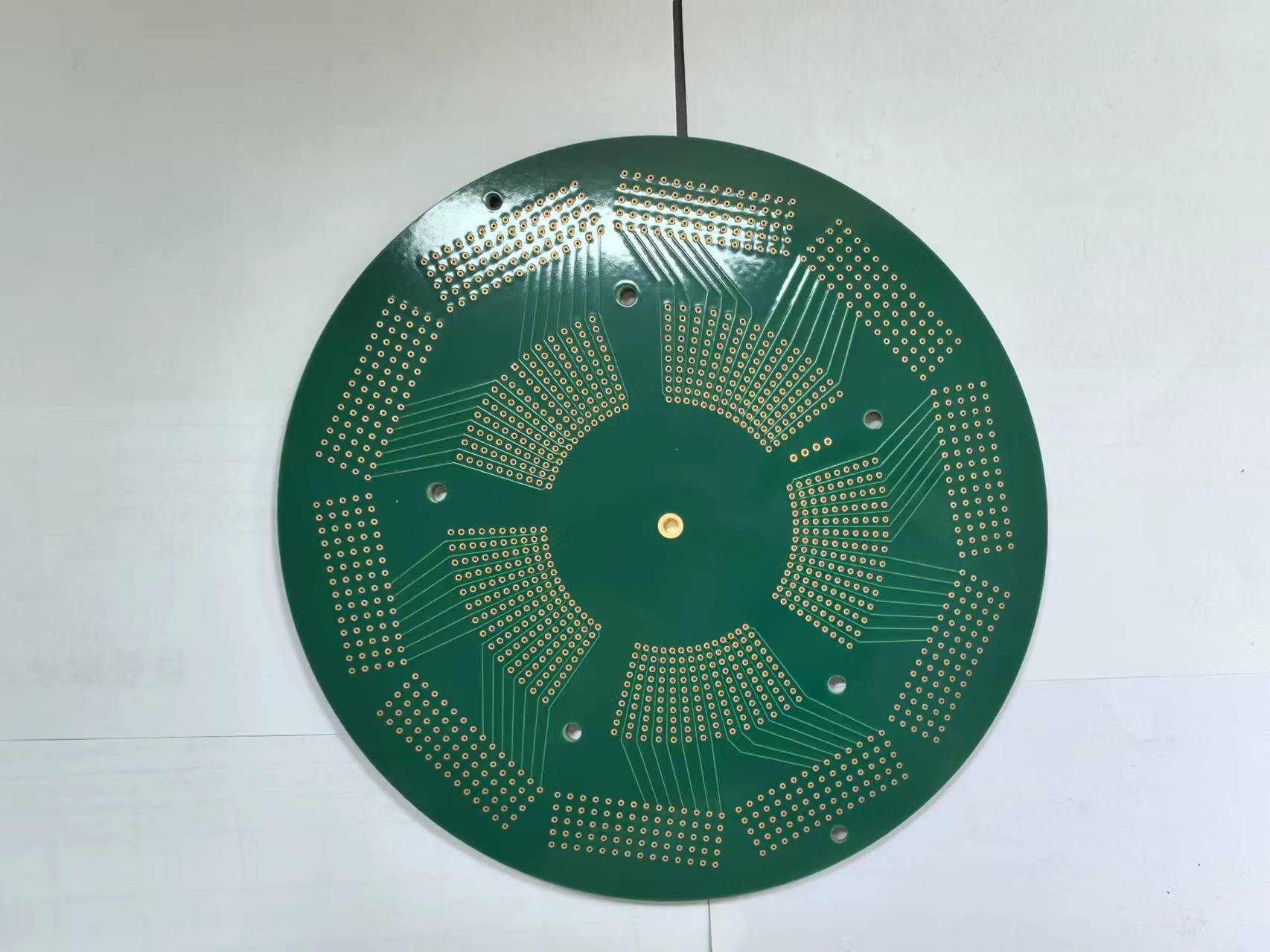
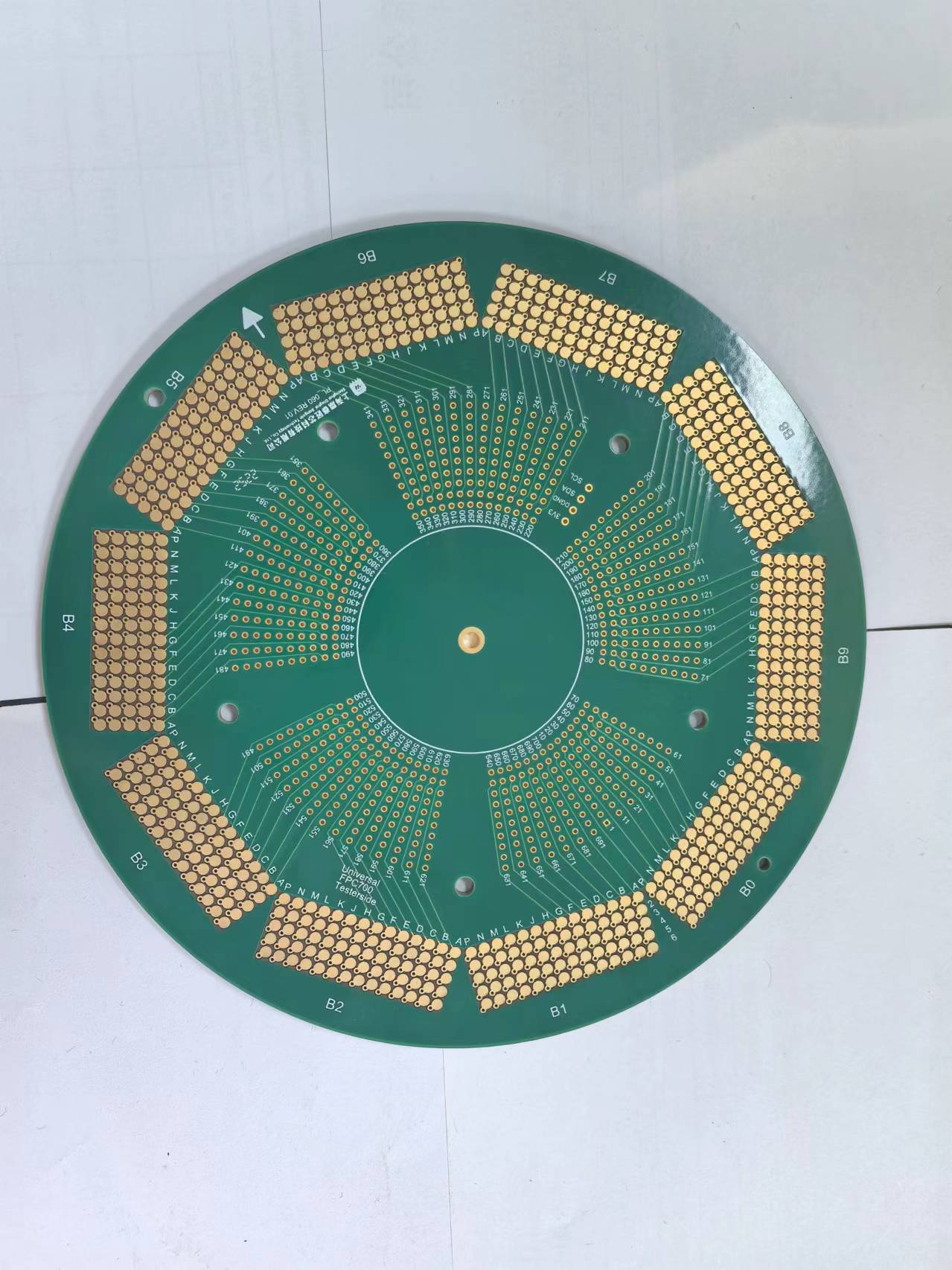
The 20 layer IC industrial control test substrate is a high-performance circuit board designed specifically for integrated circuit (IC) testing and industrial control applications. This substrate adopts a multi-layer structure and advanced materials, aiming to provide excellent signal integrity, thermal management, and reliability, and is widely used in automation equipment, industrial control systems, embedded systems, and testing equipment.
Product Features
1. High density interconnect design: The 20 layer structure supports high-density wiring, adapts to complex circuit design requirements, and ensures efficient and stable signal transmission.
2. Excellent electrical performance: Using low dielectric constant (Dk) and low dielectric loss (Df) materials, optimizing signal transmission, reducing signal delay and reflection, and improving overall performance.
3. Excellent heat dissipation management: The design considers heat dissipation solutions, ensuring thermal stability under high load working conditions and extending the service life of the substrate through effective thermal management technology.
4. High reliability: Through strict quality control and environmental testing, the reliability of the product is ensured under various harsh environmental conditions, making it suitable for long-term industrial applications.
5. Powerful testing capabilities: The substrate design integrates multiple testing interfaces and functional modules, supporting fast and accurate IC testing to meet the needs of different applications.
6. Flexible Scalability: Provides multiple interfaces and connection options, such as USB, UART, SPI, I2C, etc., for easy integration with other devices and modules.
Technical Specifications
·Number of floors: 20
·Material FR-4, SY1000-2
·Thickness: 5.0mm
·Copper thickness: Inner 0.1, Outer 1OZ
·Ink color: green, oil, white letters
·Minimum line width/spacing: 0.1mm/0.1mm
·Is there solder mask: None
·Surface treatment: immersion gold
Application field
·Industrial automation: used for testing and validation of control systems and automation equipment.
·Embedded system: supports the development and testing of various embedded applications.
·Electronic testing equipment: used as a testing platform for performance evaluation and troubleshooting of integrated circuits.
·IoT devices: support the development and testing of IoT related products.
production process
·Precision etching and laser drilling: ensuring the accuracy of circuit graphics and meeting the requirements of high-density interconnect (HDI) design.
·Multi layer lamination technology: using high-temperature and high-pressure processes to combine materials of different layers, ensuring electrical performance and mechanical strength.
·Surface treatment: Multiple surface treatment methods can be selected, such as chemical gold plating (ENIG), hot air leveling (HASL), etc., to improve welding reliability and corrosion resistance.
Conclusion
The 20 layer IC industrial control test substrate has become an indispensable tool in modern industrial control and integrated circuit testing due to its excellent performance, reliability, and flexible application characteristics. Whether in terms of signal integrity, thermal management, or testing functionality, this substrate demonstrates significant advantages, assisting in the development and testing of various electronic products
FQA:
Q: What should we consider When designing this type of PCB?
A: As the following,
1. Ensure all design elements comply with IPC standards: Use automated Design Rule Check (DRC) tools to identify and correct issues.
2. Select the appropriate substrate material based on application requirements: Consider using high Tg materials to improve reliability.
3. Process capability: Communicate with the process to understand manufacturing capabilities and limitations, avoiding overly complex designs.
4. Use impedance matching techniques: Control trace width and interlayer spacing to reduce signal attenuation and reflection.
5. Design appropriate power and ground plane layouts: Use decoupling capacitors and filters to stabilize power supply.
6. Use thermal simulation tools: Predict and optimize thermal performance, select appropriate thermal management materials and designs.
7. Adhere to EMI design guidelines: Conduct EMI testing and certification.
8. Conduct reliability tests: Such as high temperature and humidity testing, thermal cycling testing, use redundant design and fault detection mechanisms.
9. Conduct thorough testing and verification during the design phase: Use automated test equipment and software to improve test efficiency and accuracy.
10. Consider cost factors in the early design stage: Optimize the design to reduce material usage and manufacturing complexity.